
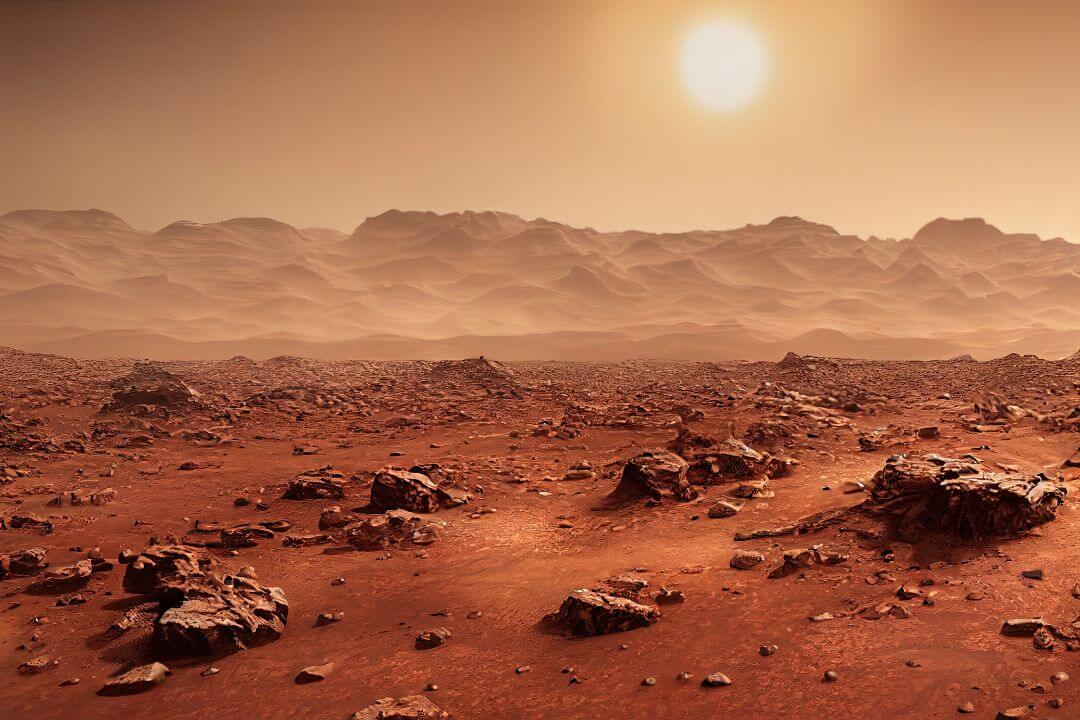
In the grand scheme of space exploration, the question of human habitation on Mars has become increasingly prominent. With ambitious plans for Mars colonization, there’s a pressing need to understand whether our bodies are up to the challenge of living in such an extreme environment. From the harsh radiation to the gravitational variances, the Martian terrain presents a myriad of challenges for human physiology. In this article, we will dig through the intricacies of whether our bodies can withstand the rigors of Martian living conditions.
Understanding Martian Environment
Before even talking of the nuances of human physiology on Mars, let’s first grasp the unique characteristics of the Red Planet’s environment:
Atmosphere
Mars, often referred to as the “Red Planet,” possesses an atmosphere vastly different from that of Earth. Understanding the composition and dynamics of the Martian atmosphere is crucial for comprehending the challenges and opportunities it presents for human exploration and potential colonization.
Composition
The Martian atmosphere primarily consists of:
- Carbon Dioxide (CO2): This gas dominates the Martian atmosphere, comprising about 95.3% of its volume.
- Nitrogen (N2): Nitrogen makes up a small fraction of the Martian atmosphere, accounting for approximately 2.7%.
- Argon (Ar): Argon constitutes about 1.6% of the Martian atmosphere.
- Trace Gases: Other gases, such as oxygen (O2), water vapor (H2O), and methane (CH4), exist in trace amounts.
Pressure and Density
Despite its composition, the Martian atmosphere is extremely thin compared to Earth’s atmosphere. The average surface pressure on Mars is about 0.6% that of Earth’s sea level pressure. This low pressure results in a density of around 0.02 kg/m³, approximately 1% of Earth’s atmospheric density at sea level.
Weather and Climate
Mars experiences weather phenomena similar to Earth, albeit with significant differences due to its thin atmosphere and distance from the Sun. Key aspects of Martian weather and climate include:
- Temperature Extremes: Martian surface temperatures can vary widely, ranging from as low as -195°F (-125°C) near the poles during winter to highs of about 70°F (20°C) at equatorial regions during summer.
- Dust Storms: Mars is known for its frequent and sometimes massive dust storms that can engulf the entire planet and last for weeks or months. These storms play a crucial role in shaping the Martian landscape and influencing atmospheric dynamics.
- Seasonal Changes: Mars experiences distinct seasons, similar to Earth, due to its axial tilt. However, Martian seasons are about twice as long as Earth’s due to its longer orbital period.
Atmospheric Dynamics
Despite its thinness, the Martian atmosphere exhibits complex dynamics that influence surface conditions and weather patterns. Key atmospheric processes on Mars include:
- Wind Erosion: Martian winds, although relatively weak compared to Earth, can still cause significant erosion and transport dust across the planet’s surface.
- Seasonal Polar Caps: Mars has polar ice caps composed primarily of water ice, which undergo seasonal changes in size and composition as temperatures fluctuate.
- Greenhouse Effect: Despite the abundance of CO2 in the Martian atmosphere, its greenhouse effect is relatively weak due to the thin atmosphere, resulting in limited heat retention compared to Earth.
Implications for Human Exploration
The unique characteristics of the Martian atmosphere pose both challenges and opportunities for human exploration and potential colonization:
- Breathable Air: While the Martian atmosphere is mainly carbon dioxide, it could potentially be utilized for oxygen production through electrolysis or other methods, providing a critical resource for sustained human presence.
- Pressure and Radiation: The low atmospheric pressure on Mars offers little protection against cosmic and solar radiation, necessitating the development of radiation shielding technologies for habitats and spacesuits.
- Weather Hazards: Dust storms and temperature extremes pose hazards to human explorers and infrastructure, requiring robust engineering solutions and contingency plans.
Gravity
Gravity is a fundamental force that governs the motion of objects in the universe, and the gravitational field strength varies from one celestial body to another. Mars, being a significantly smaller planet than Earth, exhibits a gravitational force that differs notably from Earth’s gravity. Let’s take a look deeper into the intricacies of Martian gravity and its implications for human exploration.
Gravity on Mars
The surface gravity on Mars is approximately 38% that of Earth’s gravity. This means that objects on Mars weigh about 38% of what they would weigh on Earth. The difference in gravitational force between Mars and Earth has several important consequences for human physiology and exploration:
-
Weight Difference: Astronauts and rovers experience a noticeable reduction in weight when on the surface of Mars compared to Earth. This affects mobility, the force required for movement, and the dynamics of vehicle operations.
-
Effects on the Human Body: The lower gravity on Mars can lead to physiological changes in astronauts over extended periods. These changes may include muscle atrophy, bone density loss, and alterations in cardiovascular function due to reduced mechanical stress on the body.
Adaptation Challenges
The human body is finely tuned to Earth’s gravitational environment, and transitioning to the lower gravity of Mars poses adaptation challenges. Some of the key hurdles include:
-
Muscle Atrophy: In the reduced gravity of Mars, muscles experience less resistance during movement, leading to a gradual weakening of muscle mass if not adequately exercised.
-
Bone Density Loss: The lower gravitational force on Mars results in reduced loading on bones, which can lead to decreased bone density over time. This phenomenon, known as spaceflight osteopenia, increases the risk of fractures and skeletal health issues.
Mitigation Strategies
To counteract the effects of reduced gravity on Mars, astronauts rely on various mitigation strategies:
-
Exercise Regimens: Astronauts engage in rigorous exercise routines, including resistance training and cardiovascular workouts, to maintain muscle strength and bone density during space missions.
-
Artificial Gravity: Concepts such as rotating habitats or spacecraft to simulate gravity through centrifugal force are being explored as potential solutions for mitigating the physiological effects of low gravity during long-duration space missions.
Implications for Exploration
Understanding Martian gravity is crucial for planning and executing missions to the Red Planet:
-
Mobility: Rovers and other exploration vehicles designed for Mars must account for the lower gravity to ensure stability, maneuverability, and efficient operation on the Martian surface.
-
Human Health: Ensuring the health and well-being of astronauts during missions to Mars requires comprehensive medical monitoring, exercise protocols, and countermeasures to mitigate the adverse effects of reduced gravity on the human body.
Temperature
Temperature is a critical factor that influences the habitability and environmental conditions on a planetary surface. Mars, with its thin atmosphere and varying topography, experiences extreme temperature fluctuations that significantly impact its climate and potential for human exploration. Let’s delve into the complexities of Martian temperature and its implications for scientific understanding and future missions.
Temperature Extremes
Mars is known for its stark temperature contrasts, with surface temperatures ranging from frigid lows to relatively milder highs:
-
Cold Nights: During Martian nights, temperatures can plummet to extremes, reaching lows of around -195°F (-125°C) near the poles during winter. The thin atmosphere offers minimal insulation, allowing heat to escape rapidly into space.
-
Moderate Daytime Temperatures: Despite the cold nights, daytime temperatures on Mars can rise to more moderate levels, reaching highs of about 70°F (20°C) at equatorial regions during summer. However, these temperatures are still significantly cooler than those typically experienced on Earth.
READ ALSO: What is “Transurfing”?
Factors Influencing Temperature
Several factors contribute to the temperature variations observed on Mars:
-
Atmospheric Composition: The thin Martian atmosphere, composed primarily of carbon dioxide, has limited heat-retention capabilities compared to Earth’s atmosphere. This results in rapid temperature changes between day and night.
-
Surface Albedo: Mars’ surface features, including dust, rocks, and polar ice caps, influence its albedo—the amount of sunlight reflected back into space. Darker surfaces absorb more heat, while lighter surfaces reflect more sunlight, impacting local temperature patterns.
-
Seasonal Changes: Like Earth, Mars experiences distinct seasons due to its axial tilt. However, Martian seasons are approximately twice as long as Earth’s due to its longer orbital period. Seasonal variations in solar insolation contribute to temperature fluctuations across the planet.
Impact on Exploration
Understanding Martian temperature is essential for planning and executing missions to the Red Planet:
-
Thermal Regulation: Spacecraft, landers, and habitats destined for Mars must incorporate robust thermal regulation systems to withstand the extreme temperature variations encountered on the Martian surface. These systems help maintain internal temperatures within safe operating ranges and protect sensitive equipment and instruments.
-
Spacesuit Design: Spacesuits worn by astronauts during extravehicular activities (EVAs) on Mars must provide adequate insulation and temperature control to protect against the harsh environmental conditions. Advanced materials and thermal management technologies are employed to ensure astronaut comfort and safety.
Scientific Insights
Studying Martian temperature variations offers valuable insights into planetary dynamics and climate processes:
-
Atmospheric Dynamics: Monitoring temperature changes on Mars provides clues about atmospheric circulation patterns, heat transfer mechanisms, and the behavior of atmospheric gases. These data help scientists better understand the complex interplay between the atmosphere, surface, and solar radiation.
-
Geological Activity: Temperature variations influence geological processes such as weathering, erosion, and thermal expansion and contraction of surface materials. Observing temperature fluctuations can shed light on the geologic history and evolution of Mars’ surface features.
Adaptation Challenges
Living on Mars presents a multitude of challenges for the human body to adapt to. Some of the key hurdles include:
-
Gravity Variation: The significant difference in gravitational force between Earth and Mars could have profound effects on human physiology, including muscle atrophy, bone density loss, and cardiovascular changes.
-
Radiation Exposure: Mars lacks a robust magnetic field and thick atmosphere, exposing its surface to higher levels of cosmic and solar radiation compared to Earth. Prolonged exposure to such radiation can increase the risk of cancer and other health issues.
-
Atmospheric Composition: The Martian atmosphere’s composition differs vastly from Earth’s, posing challenges for breathing and oxygenation of tissues.
-
Temperature Extremes: Coping with the extreme cold of Martian nights and the relatively milder temperatures during the day requires robust thermal regulation mechanisms.
Human Physiology in Space
To assess whether our bodies can withstand the Martian environment, it’s essential to understand how human physiology reacts to the rigors of space exploration:
-
Musculoskeletal Adaptations: Extended periods of weightlessness in space can lead to muscle weakening and bone density loss. Astronauts undergo rigorous exercise routines to mitigate these effects.
-
Cardiovascular Changes: The cardiovascular system undergoes adjustments in space due to the redistribution of blood volume and decreased physical stress on the heart.
-
Immune System: Space travel can suppress the immune system, leaving astronauts more susceptible to infections. Maintaining hygiene and sanitation onboard spacecraft is crucial to mitigate this risk.
Biological Resilience and Adaptation
Despite the challenges posed by space exploration, the human body exhibits remarkable resilience and adaptability:
-
Plasticity: Human physiology has shown the ability to adapt to various environmental conditions over time. Through targeted interventions and technological advancements, researchers aim to enhance our ability to thrive in extraterrestrial environments.
-
Biomedical Innovations: Ongoing research into biomedical interventions such as artificial gravity, radiation shielding, and advanced life support systems holds promise for overcoming the physiological challenges of Martian habitation.
Astronaut Health and Interplanetary Survival
Ensuring the health and well-being of astronauts during extended missions to Mars is paramount:
-
Medical Monitoring: Continuous monitoring of astronauts’ health parameters, including vital signs, bone density, and radiation exposure levels, is essential for early detection and management of health issues.
-
Psychological Support: Long-duration space missions can take a toll on astronauts’ mental health. Providing psychological support and recreational activities is crucial for maintaining crew morale and cohesion.
-
Risk Mitigation Strategies: Developing robust contingency plans and medical protocols for addressing emergencies in a Martian environment is critical for ensuring mission success and crew safety.
In conclusion, while the challenges of living on Mars are formidable, ongoing research and technological advancements offer hope for overcoming these obstacles. By understanding the intricacies of human physiology in space and implementing innovative solutions, we can pave the way for the realization of Mars colonization and interplanetary exploration.
Frequently Asked Questions (FAQ)
1. How does gravity affect the human body on Mars?
- Answer: The reduced gravity on Mars can lead to muscle atrophy, bone density loss, and cardiovascular changes due to decreased mechanical stress on the body.
2. What are the health risks associated with radiation exposure on Mars?
- Answer: Prolonged exposure to Martian radiation can increase the risk of cancer, damage DNA, and compromise the immune system, posing significant health risks for astronauts.
3. How do astronauts cope with extreme temperature fluctuations on Mars?
- Answer: Astronauts rely on advanced thermal regulation systems in their spacesuits and habitats to cope with the extreme temperature variations on Mars, ensuring their comfort and safety.
4. What measures are taken to ensure astronaut health during long-duration space missions?
- Answer: Astronauts undergo rigorous medical monitoring, exercise routines, and psychological support programs to maintain their physical and mental well-being during extended missions to Mars.
5. How are researchers addressing the challenge of oxygenation in the Martian atmosphere?
- Answer: Researchers are exploring various technologies for oxygen extraction from Martian resources such as water ice and carbon dioxide, providing sustainable solutions for breathing and life support systems on Mars.
